
Bell’s Palsy Treatment with Advanced Nerve Therapy
At both our chiropractic clinics in Altavista and Lynchburg, we offer a specialized, non‑invasive program for Bell’s Palsy that focuses on healing the facial nerve and restoring balanced muscle function using Class 4 high‑intensity laser therapy and/or Stimpod NMS460 transcutaneous pulsed radiofrequency (tPRF).
Understanding Bell’s Palsy
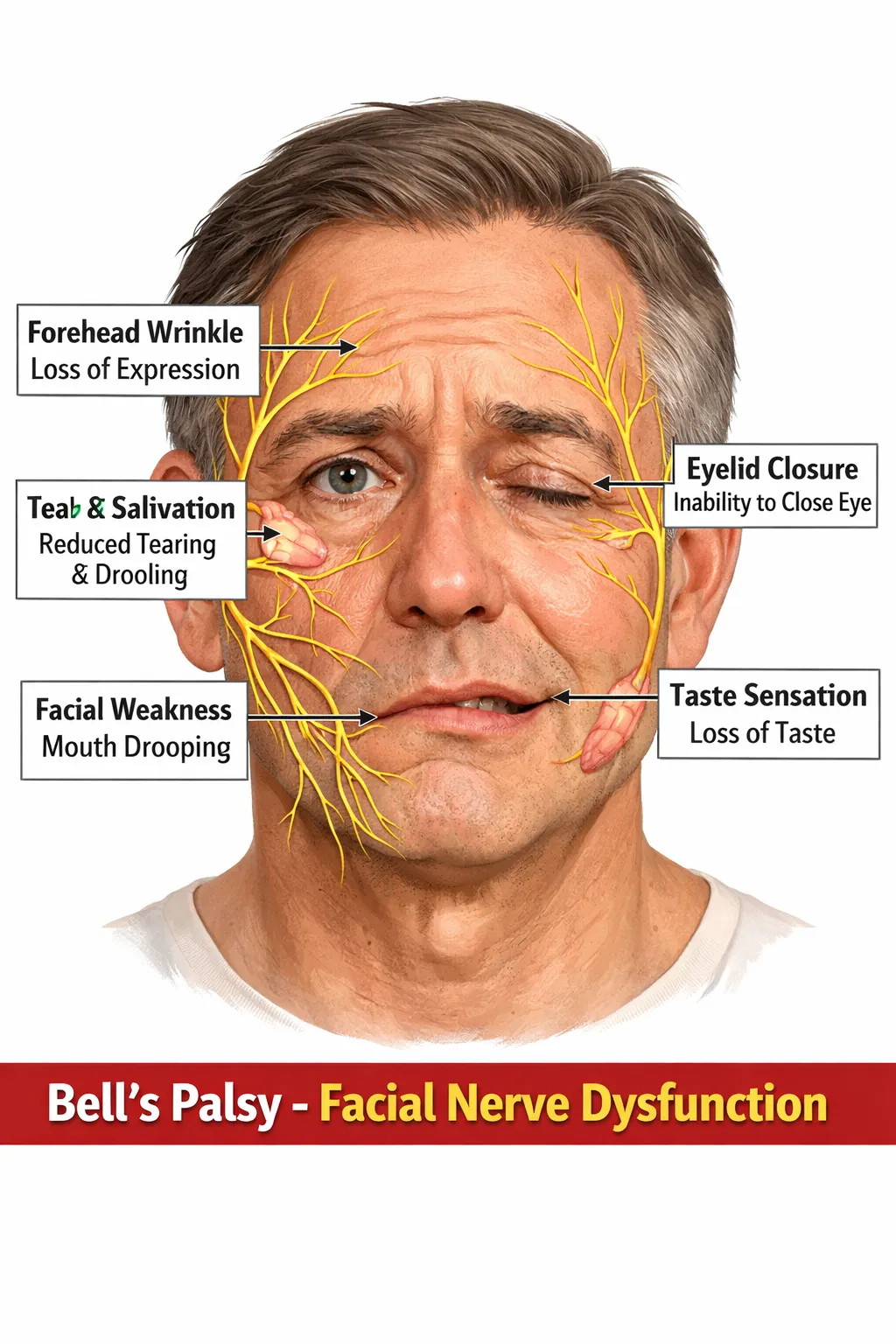
Bell’s Palsy is a sudden weakness or paralysis of the muscles on one side of the face caused by irritation or inflammation of the facial nerve (cranial nerve VII). Patients commonly notice facial drooping, difficulty closing one eye, altered taste, and trouble with normal facial expressions such as smiling or raising the eyebrows.
Conventional care often includes medications and basic exercises, but many patients are left with lingering weakness, tightness, or abnormal movements if the nerve does not fully recover. Our goal is to go beyond symptom management and actively support nerve repair, circulation, and muscular re‑education.
How Class 4 High‑Intensity Laser Helps the Facial Nerve
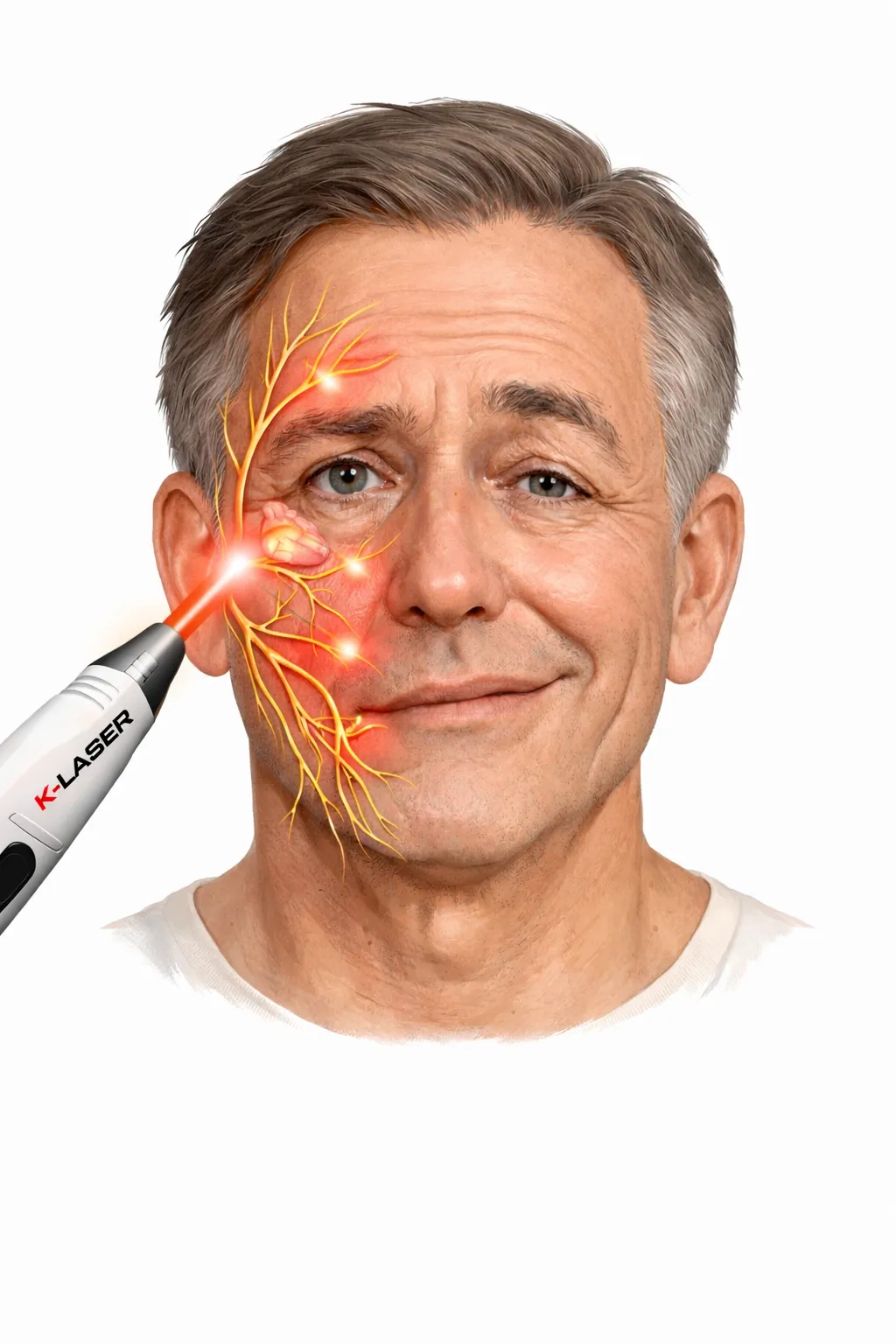
Class 4 therapeutic lasers deliver a focused beam of light energy powerful enough to penetrate several centimeters into tissue, reaching the deeper course of the facial nerve and surrounding structures. Unlike very low‑power “cold” lasers, Class 4 technology allows us to treat a larger volume of tissue more efficiently while still being non‑invasive and comfortable for most patients.
What the Laser Does at the Cellular Level
Research on laser therapy for peripheral nerves and facial palsy suggests several key biological effects:
- Stimulates nerve cell metabolism and mitochondrial energy production, supporting regeneration of injured nerve fibers.
- Improves local blood flow (vasodilation), bringing more oxygen and nutrients to the nerve while helping clear inflammatory byproducts.
- Reduces inflammation and tissue swelling around the nerve, which can decrease compression and irritation.
- Enhances axonal growth and myelin repair, which are essential for normal nerve conduction and muscle control.
In Bell’s Palsy, this means helping the facial nerve recover more efficiently so it can send cleaner, stronger signals to the muscles of expression. Case reports and clinical studies of high‑intensity or Class 4 laser for facial palsy have documented improvements in facial movement, symmetry, and muscle control when laser is added to a rehabilitation program.
Potential Benefits for Bell’s Palsy
Patients receiving Class 4 laser as part of a Bell’s Palsy plan may experience:
- Faster return of facial movement and improved ability to smile, close the eye, and raise the eyebrow.
- Better facial symmetry and reduced tightness or pulling sensations as the nerve recovers.
- Decreased pain, burning, or sensitivity along the facial nerve distribution.
- Support for both acute cases and chronic cases (symptoms lasting 6 months or longer), when nerve healing has stalled.
During treatment, the handpiece is moved gently along the course of the facial nerve and its branches, as well as key exit points near the ear and jaw, with parameters tailored to your presentation and sensitivity.
How Stimpod NMS460 tPRF Supports Nerve Reset
The Stimpod NMS460 uses a specialized transcutaneous pulsed radiofrequency (tPRF) waveform delivered through a small pen‑like probe applied to the skin over the affected nerve. This is not a heat‑based surgical procedure; the energy level is low and designed to influence nerve signaling and membrane behavior rather than burn or ablate tissue.
Effects on Nerve Function
tPRF neuromodulation with Stimpod has been used for irritated, hypersensitive, or poorly functioning peripheral nerves. Key proposed effects include:
- Calming abnormal nerve firing patterns, helping to reduce unwanted spasms, twitching, or “electrical” sensations along the face.
- Normalizing how the nerve responds to incoming and outgoing signals, which may help refine facial movements.
- Supporting mitochondrial energy production inside the nerve, addressing the “energy crisis” that often occurs in chronically irritated nerves.
- Modulating how the nerve communicates back toward the brainstem and spinal cord, potentially improving coordination of facial expression pathways.
For Bell’s Palsy, we use the Stimpod to “reset” the facial nerve as it recovers, aiming to reduce miswiring, synkinesis (unwanted linked movements), and residual weakness. Many patients describe a gentle tapping or pulsing sensation during treatment that lets them know the nerve is being engaged.
Potential Benefits for Bell’s Palsy
When incorporated into a structured program, Stimpod tPRF may offer:
- Reduced abnormal movements or tightness as the facial nerve heals.
- Improved coordination of facial muscles, making expressions feel more natural and balanced.
- Decreased nerve‑related discomfort, tingling, or burning.
- Longer‑lasting improvements because the therapy targets nerve function rather than simply masking symptoms.
Sessions are typically brief, and the stimulation parameters are adjusted based on your response, comfort, and stage of recovery.

Why Combine Class 4 Laser and Stimpod?
Bell’s Palsy affects both the nerve and the muscles it supplies, so addressing only one aspect often leaves patients with incomplete recovery. Combining Class 4 laser and Stimpod tPRF allows us to create a more comprehensive environment for healing.
Synergistic Effects
Used together, these technologies can:
- Reduce inflammation and swelling around the facial nerve (laser) while simultaneously calming abnormal firing and improving signaling within the nerve (Stimpod).
- Improve blood flow and tissue oxygenation (laser), making it easier for the nerve to respond to neuromodulation (Stimpod).
- Support both structural regeneration (myelin and axons via laser) and functional “re‑training” of nerve activity (Stimpod).
This dual approach is especially helpful for patients who:
- Developed Bell’s Palsy recently and want to support early recovery.
- Have lingering weakness or asymmetry months after onset.
- Experience tightness, spasms, or synkinesis as the nerve heals.
What to Expect During Care
Your visit begins with a detailed history and neurological evaluation, including assessment of facial muscle strength, symmetry, and nerve sensitivity. We also review your medical history and medications and coordinate with your medical provider as needed.
A typical Bell’s Palsy session may include:
- Gentle chiropractic and soft‑tissue work as appropriate
- Focused on cervical and cranial mechanics to optimize blood flow and nerve function (when clinically indicated).
- Class 4 high‑intensity laser therapy
- Applied along the facial nerve pathway and key facial muscles.
- Most patients feel a mild, soothing warmth in the treated area.
- Stimpod NMS460 tPRF neuromodulation
- The pen‑like probe is moved over specific nerve points and facial regions.
- You may feel light tapping or pulsing as the nerve responds.
- Home care and exercises
- You may be given targeted facial exercises, posture advice, or self‑care strategies to reinforce in‑office gains between visits.
Care plans are customized, but many patients begin with several visits over the first few weeks, then taper as improvements stabilize.
Safety and Important Considerations
Both Class 4 laser therapy and Stimpod tPRF are non‑invasive, drug‑free treatments performed on the surface of the skin. They are generally well tolerated, with safety guidelines that include protective eyewear for laser sessions and careful screening for contraindications such as pregnancy, active malignancy in the treatment area, or implanted electronic devices.
Results can vary based on the severity of the nerve injury, how quickly care begins, and individual health factors. Our approach is to work alongside your primary and specialist physicians to provide an integrative, conservative option that focuses on restoring function rather than simply waiting and hoping for improvement.
Schedule a Bell’s Palsy Evaluation
If you or a loved one is experiencing facial weakness or lingering effects of Bell’s Palsy, we invite you to schedule a comprehensive evaluation to see whether Class 4 laser therapy and Stimpod NMS460 neuromodulation are appropriate options. Early, targeted support for the facial nerve may help optimize your recovery and improve your confidence in everyday facial expressions.
